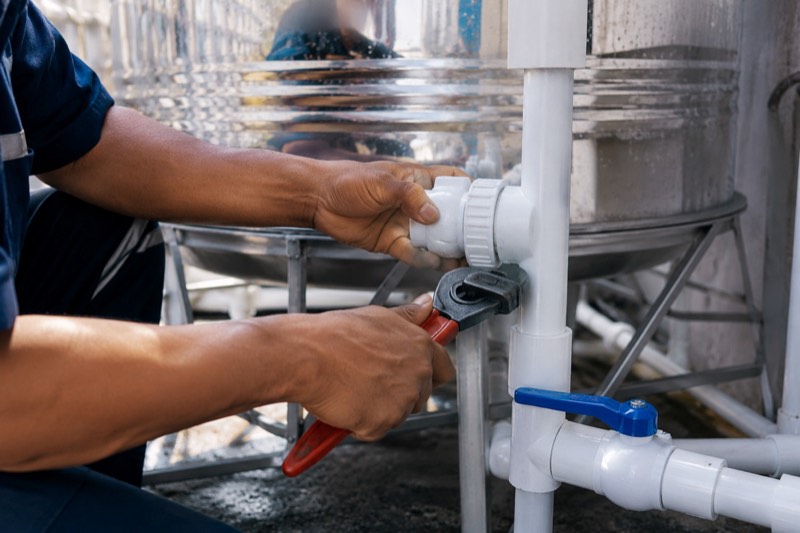
The water tank float valve is the smallest component in your home water supply system — but when it fails, you feel the effects fastest. Either the tank overflows until your roof space is soaked, or the opposite happens: no water comes in at all and the house runs dry. In most cases, both of these problems trace back to the same one thing: the float valve.
In this guide we explain how a water tank float valve works, the signs that it is starting to fail, the types available on the market, and when you should fix it yourself or call a licensed plumber.
What Does a Water Tank Float Valve Do?
The float valve (also called a ball float valve or ball cock) controls the water level in your tank automatically. When the water level drops, the float drops with it and opens the valve so water flows in. When the water reaches the full level, the float rises with it and shuts the valve off.
This simple mechanism is what keeps your home water tank constantly topped up without ever overflowing. Without a working float valve, the tank would keep filling until water spills out through the overflow pipe — wasting water and, over the long run, potentially damaging your ceiling or roof structure.
Signs Your Water Tank Float Valve Is Failing
Most float valves last for years, but the valve washer and the float arm joints do wear out. These are the most common warning signs:
- A dripping or continuously running water sound from the direction of the tank even when nobody is using water — the valve is not sealing shut.
- Water spilling out of the overflow pipe at the edge of the roof — the float is stuck or has sprung a leak.
- House water pressure suddenly turns weak — the water level in the tank is low because the valve is not opening fully.
- The float ball has water inside when you shake it — the ball has a leak and can no longer float properly.
Types of Float Valves & Rough Prices
In the Malaysian market there are several types of water tank float valves: the traditional brass ball float valve, modern plastic float valves, and piston-type valves that run quieter. The float valve part itself usually costs anywhere from around ten to a few tens of ringgit depending on the type and pipe size.
More important than the price of the part is proper installation — the float arm needs to be adjusted to the correct angle so the tank fills to the right level, and the connection to the inlet pipe must be done neatly so it does not leak.
When you go to buy one, bring a photo of the old valve — or the old part itself — to the shop. The inlet pipe thread size must match exactly. A nice-looking float valve in the wrong size just adds one more adapter fitting, and every extra fitting is one more point that can leak.
How to Adjust a Water Tank Float Valve Correctly
Many "faulty float valve" complaints are actually adjustment problems. A float arm set too high lets water rise past the safe level and escape through the overflow pipe; an arm set too low means the tank never fills properly and the house water pressure stays weak. The correct adjustment: the full water level should stop around 2-3 inches below the mouth of the overflow pipe.
How you adjust it depends on the type of valve. For a traditional metal arm, bend the arm slightly downward to lower the full level — do it little by little, never one big bend. For modern plastic float valves, there is usually an adjustment screw or a clip on the arm that can be moved without bending anything.
After adjusting, wait through one full cycle: let the water rise until the valve shuts on its own, then watch it for 10-15 minutes. If you can still hear water coming in after the valve should have closed, the valve washer has probably worn out — that is no longer an adjustment problem, it is time for a replacement.
Tank Covers & Routine Care That Protect the Float Valve
A float valve lasts longer when the tank is looked after. A tightly fitted water tank cover keeps out leaves, dust and dead insects — and it is exactly this debris that gets lodged in the valve and stops the float from sealing shut. A missing or cracked cover should be replaced right away, not left for later.
Make this quick check a routine every few months: open the cover and look at the water colour (cloudy means there is sediment), shake the float ball to confirm there is no water inside it, move the arm up and down to feel whether the valve opens and closes smoothly, and check that the overflow pipe is not blocked by insect nests.
A five-minute check like this is often what saves the ceiling of a house — because an overflowing tank rarely happens out of nowhere; it starts with a valve that has not been sealing properly for a long time while nobody noticed.
Fix It Yourself or Call a Plumber?
If you are comfortable climbing up to the tank space and the problem is obvious — for example a leaking float ball — replacing the float valve is a reasonable DIY job. Just make sure you shut off the inlet supply valve before opening anything.
But if your tank is getting old, there is rust around the fittings, or the problem keeps coming back even after you have replaced the float valve — that is usually a sign of a bigger issue with the tank itself. At that point, it is cheaper to have the whole tank checked than to keep patching small problems over and over.
The Abang Tank team checks the float valve, the inlet valve and the condition of the tank all in one go during the free site visit — if it is just the float valve, we tell you it is just the float valve. If the tank has reached the end of its life, we tell you straight and give you your options.
FAQ — water tank float valve
How long does a water tank float valve usually last?
It depends on your water quality and the type of valve — usually several years. The valve washer is the first part to wear out. If your tank is 10 years old or more and the float valve has never been changed, it is worth getting it checked.
Why does my water tank still overflow even with a new float valve?
Most likely the float arm was not adjusted properly, the float valve size does not match the inlet, or the incoming water pressure is too high. Correct installation matters just as much as a new part.
Is float valve replacement included in Abang Tank services?
Yes — with every new water tank installation, a new float valve is included. For existing tanks, we check it during the free site visit and quote only the work that is actually needed.
Can I adjust the float valve so the tank stores more water?
Yes, by raising the float arm — but never let the full level get too close to the overflow pipe. Leave at least 2-3 inches of clearance so fluctuations in incoming water pressure do not cause an overflow.
Read Next
→ Leaking Water Tank: Causes, Temporary Patches & When to Replace It→ Why Is My Water Tank Making Noise? 4 Causes & How To Fix Them